A Child’s Exclusion and Our National Crisis
Paul Salahuddin Armstrong, 16th July 2025
I am incandescent with outrage—and not because of some fringe grievance, but because of what happened to a brave 12‑year‑old girl in Rugby, Warwickshire. On 11th July, Courtney Wright, a straight‑A Year 7 pupil, wore a Union Flag dress to her school’s “Culture Celebration Day” at Bilton School. Under the guidance of a policy promising inclusivity and respect for all heritages, Courtney chose to celebrate her own—British culture. Yet, she was barred from participating.

She was told, bluntly, “You get to celebrate being British every day; this event is for everyone else.” Who in their right mind would say that to a child, any child? Imagine saying that to a young British Black or British Asian child? Isn’t this encouraging divison, the very antithesis of what Culture Day stands for? She was made to sit in reception until her father, Stuart Field, collected her. Despite preparing a speech celebrating British staples—tea, fish and chips, Shakespeare, the Royal Family—Courtney was excluded. She had complied with every guideline, yet was treated as though loving her country is a crime!
This is more than a school incident—it is a symptom of a toxic narrative sweeping through too many supposedly progressive institutions. The message is clear: celebrate everything but your own.
Downing Street has rightly responded. A spokesperson for Prime Minister Sir Keir Starmer emphasised that “being British is something to be celebrated.” No 10 has voiced support for Courtney and made clear that the school’s apology—no matter how contrite—is not nearly enough.
Courtney’s father, Stuart Field, explained that his daughter, “couldn’t understand what she’d done wrong.” She was, he says, “embarrassed” and deeply upset by her treatment. After the backlash, Bilton School, under the Stowe Valley Multi Academy Trust, issued a formal apology, describing the incident as a “misjudgement,” and committed to reviewing its culture‑celebration policies and staff training.
Yet this apology feels hollow. It reads like a PR dodge rather than a genuine reckoning. The school claims it encourages cultural attire—but only “other” cultures. Their mindset suggests that British identity is somehow so secure it needs no celebration—except, as we’ve seen, it does.
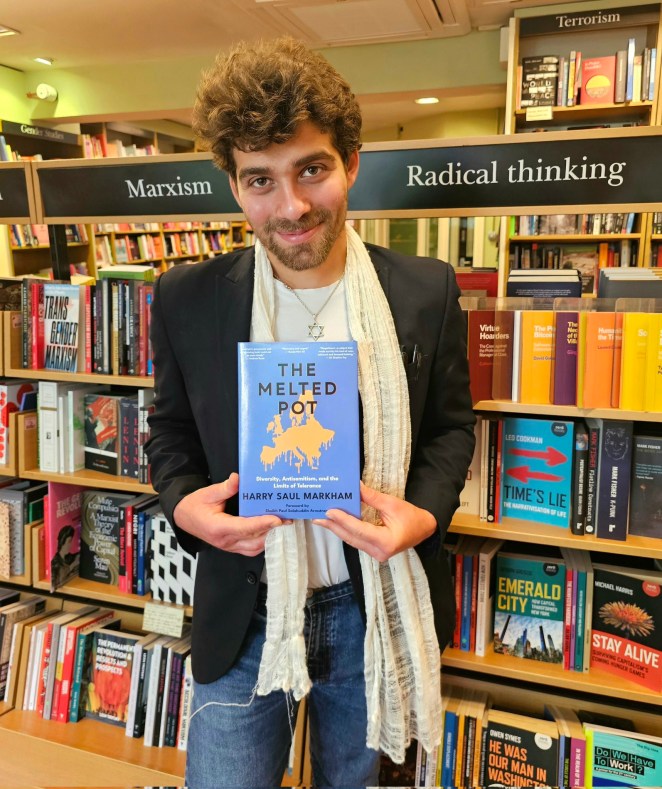
This is the nightmare The Melted Pot warned us about. Harry Saul Markham, in his powerful, urgently relevant book, thoughtfully explores how Britain’s shared heritage is being systematically sidelined in the name of diversity. I had the honour of writing the foreword for The Melted Pot, and here we see exactly what he cautioned against: the erasure of British identity from institutions that should be most staunch in championing it.
In this moment, courts are not discussing extremist hatred or foreign flags. We are witnessing the discouragement of Britishness—and even the silencing of the innocent for expressing pride in their homeland.
Recent decades have witnessed heroic progress: equality laws, mass migration welcoming cultures from across the globe, and national celebrations of difference. But inclusion isn’t about elevating others at the expense of the majority—nor is it about teaching children to believe their own identity is unworthy of notice.
To make a young British girl feel ashamed for wearing her country’s symbol is not progressive—it’s punitive. It’s time to call it what it is: cultural amnesia, dressed in political correctness. This is not inclusion—it is exclusion in disguise.
Even those who disagree with me must accept that our national identity is not optional, or undeserving of celebration. How long until we tell children they may not wear the English rose or Scottish thistle? Or sing the national anthem?
The erasure of British culture is a direct threat, not only to our identity, but to our societal cohesion. Shared values and symbols—Union Flag, tea, Shakespeare, our NHS, fish and chips, the stiff upper lip, that unassuming humour—are glue. They bind us. They allow us to integrate newcomers without chaos, and preserve the continuity of our British way of life.
Critics on the hard left will call this nationalist chest‑thumping. They’ll sneer at anyone who “flaunts the flag”. Well, I say: there is nothing wrong with pride. The only thing masquerading as pride here is empty virtue-signalling. That is far more destructive than flying the flag ever could be.
When I wear my Union Flag tie, I wear it with humility and respect—for all who have contributed to this great country. That honour is a privilege, not a provocation. And so is Courtney’s right to wear her dress.
Steps We Must Take:
1. Policy Revision in Schools: Review ‘cultural day’ guidelines to explicitly include British heritage—an explicit recognition that Britishness is also a culture deserving celebration.
2. Teacher Training: Instruct staff that “everyday British identity” is not a justification for excluding it; on the contrary, it must be welcomed.
3. Public Statement from School: A genuine apology would involve hosting Courtney to deliver her speech to her peers, publicly recognising the wrongdoing, and committing to cultural balance at future events.
4. National Conversation: Invite voices from all sides—educators, parents, faith leaders, veterans, and artists—to reinvest in Britain. Schools should become the centrepiece of reopening the conversation around shared heritage.
This is love of country, and of a shared identity that sustains us. Britishness isn’t about ethnic purity or exclusion—it’s about unity in diversity. It is who we are, and we must preserve it.
Courtney Wright didn’t ask for politics. She wanted to honour Britain. In punishing her for it, Bilton School insulted every child who can sing the national anthem, who waits properly in the dinner queue, who offers a stranger polite small‑talk about the weather, or who cheers for Team GB at the Olympics.
School leaders, governors, local authorities—reflect today: have we gone too far in over‑policing identity? Have we forgotten that belonging—especially British belonging—is core to cohesion?
Let this be a turning point. Let us respond with common sense and dignity—not hate, but courage. Support Courtney. Stand for British culture. Demand better in our schools.
Because if a 12‑year‑old cannot wear her country’s colours freely…what are we allowing next?
 Paul Salahuddin Armstrong