A Prophetic Warning Must Never Become an Excuse for Hate
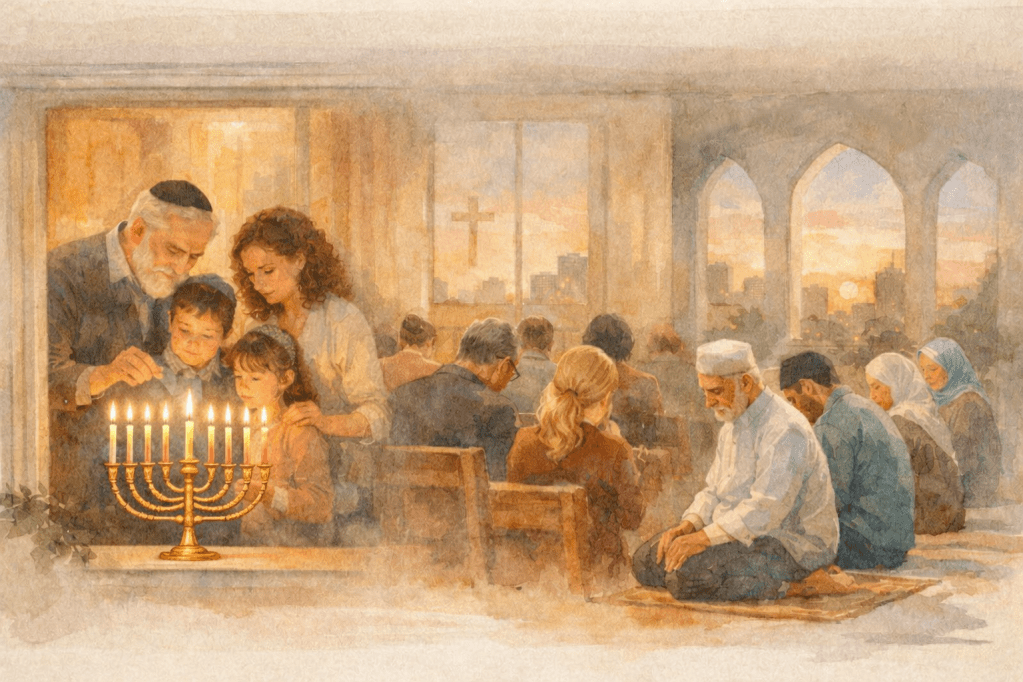
The Prophet Muhammad ﷺ laid down clear and uncompromising ethical boundaries regarding the sanctity of life and worship. In his guidance concerning conflict, he forbade the harming of non-combatants and those devoted to religious life. He said:
“Do not kill women or children or the elderly.” (Bukhari and Muslim)
In another well-known report, Abu Bakr as-Siddiq, when dispatching Yazid ibn Abi Sufyan, instructed him:
“You will find a people who claim to have totally given themselves to God. Leave them to what they claim to have given themselves.” (Malik)
From these and related narrations, classical scholars understood a clear principle: rabbis, priests, monks, and anyone engaged in worship are not to be harmed — even in times of war. This principle is not peripheral to Islam; it is foundational.
In the aftermath of the deeply disturbing attack on Jews celebrating the first day of Hanukkah in Sydney, Australia, it is therefore essential to pause and reflect — not only as an act of solidarity, but as an act of fidelity to the moral teachings of Islam itself.
An Oft Misunderstood Hadith
There is a well-known hadith in which the Prophet ﷺ makes a striking observation:
“‘You will most certainly follow the ways of those who came before you, arm’s length by arm’s length, forearm’s length by forearm’s length, hand span by hand span, until even if they entered a hole of a lizard you will enter it too.’ They said, ‘Messenger of God, (do you mean) the Jews and the Christians?’ He said. ‘Who else?’” (Bukhari)
This hadith is often misunderstood, and at times misused in ways the Prophet ﷺ himself would have firmly rejected.
It is not a condemnation of Jews or Christians.
It is not a declaration of inherent superiority.
And it is certainly not an excuse for anti-Jewish or anti-Christian bigotry.
Rather, it is a sober social and moral observation. The Prophet ﷺ is describing a recurring human pattern, that civilizations, religions, and cultures inevitably inherit ideas, customs, assumptions, and habits from those who preceded them — sometimes wisely, sometimes blindly. The warning lies not in continuity itself, but in unthinking imitation, especially when ethical discernment is lost.
The image of the “lizard’s hole” is deliberate exaggeration — a vivid metaphor for following inherited paths even when they are constricting, irrational, or harmful. But this does not indicate that it is all bad either. The Prophet ﷺ was simply sharing an observation to give people pause for reflection as he wanted people to learn from those who preceded them with discernment, applying what is beneficial while not losing themselves in the process.
A Universal Human Tendency
The Quran reinforces that this tendency is not limited to one people or one religion:
“If they are told ‘Follow what God has revealed,’ they say, ‘Rather We will follow what we found our fathers doing,’ even though their fathers did not understand anything and were not guided.”
— The Quran 2:170 (Safi Kaskas)
This verse is not aimed at Jews, Christians, or Muslims alone. It is a mirror held up to all communities, including the Muslim community itself.
Islam doesn’t ask believers to reject history, tradition, or inherited wisdom. It asks them to weigh what they inherit — to keep what is good, reform what is harmful, and never surrender conscience to habit.
Faith, Truth, and Humility
Muslims believe Islam is the true path — otherwise we would not be Muslims. This is no different from sincere believers in any religion, who hold that their own path leads to truth. But Islam draws a sharp line between conviction and arrogance.
“So do not attest to your own virtues; He knows best those who are mindful of Him.”
— The Quran 53:32 (Safi Kaskas)
Being on the right path does not automatically make us better people. Only God knows what lies within our hearts; intentions, struggles, repentance, sincerity, and unseen acts of goodness. Moral worth is not measured by religious labels, but by character and conduct.
We are warned explicitly against pride:
“Do not turn your cheek (in contempt) away from people, and do not walk in arrogance, for God does not like any vain and boastful person.”
— The Quran 31:18 (Safi Kaskas)
The Prophet ﷺ reinforced this again and again. He taught that even a trace of arrogance can undo a person spiritually. Humility was not an accessory or optional extra to his message; it was its vital foundation.
The Prophet ﷺ and the People of the Book
Any attempt to weaponize against Jews or Christians the hadith about following those before us collapses under the weight of the Prophet’s ﷺ own example affirming the dignity of the People of the Book.
“Truly those believers in this message, as well as the Jews, the Christians, and the Sabeans, whoever believes in God and in the Last Day and does righteous deeds will have their reward from their Lord, and will not have fear, nor will they grieve.”
— The Quran 2:62 (Safi Kaskas)
The Prophet ﷺ honoured Moses and Jesus as prophets of God. He stood in respect at a Jewish funeral — an incident recorded in Sahih al-Bukhari.
“A funeral procession passed in front of us and the Prophet ﷺ stood up and we too stood up. We said, ‘God’s Messenger, this is the funeral procession of a Jew.’ He said, ‘Whenever you see a funeral procession, you should stand up.’”
The Prophet ﷺ entered into binding covenants with Jewish communities and hosted Christian delegations in his mosque, even inviting them to celebrate mass within the mosque so they could feel comfortable and didn’t need to rush home. His disagreements were theological and ethical — never dehumanizing.
The governing principle is:
“God does not forbid you from dealing kindly and equitably with those who did not fight you because of your faith and did not drive you out of your homes. God loves those who are equitable.”
— The Quran 60:8 (Safi Kaskas)
Anti-Jewish or anti-Christian bigotry therefore has no place in Islamic ethics. It is not zeal. It is not strength. It is moral failure.

Who Represents Islam?
This is why, when people ask who represents Islam, the answer is not found in sneering rhetoric, contempt for others, or self-appointed guardians of religious purity.
People like Ahmed al-Ahmed, who courageously risked his own life to stop violence and protect others, are far more representative of Islam and the Prophet ﷺ than anyone who looks down on people of other beliefs or seeks their harm.
Likewise, Muslims who work quietly and consistently for the common good of humanity — who protect life, uphold justice, serve their neighbours, and resist hatred — stand closer to the Prophetic example than those who trade in rage and destruction.
The Prophet ﷺ said, “The most beloved people to God are those who are most beneficial to people.” (Tabarani)
Those who deliberately seek the destruction of others, whatever religious language they employ, stand far from Islam, not at its centre.
A Warning Meant for the Self, Not a Weapon Against Others
The hadith about following those before us is meant to humble Muslims, not to inflate or inflame anyone. It warns against:
- Inheriting prejudice without reflection
- Confusing faith with tribalism or rage
- Replacing conscience with conformity
It calls us all to reflect and to examine what we adopt as individuals and societies, and strive to do better than those who came before.
“Believers, uphold justice and bear witness to God, even if that witness is against yourself, your parents or your close relatives.”
— The Quran 4:135 (Safi Kaskas)
This is not blind imitation. It is discernment.
In a Time of Hatred, Choose the Prophetic Path
When Jews are attacked for celebrating light, when Christians face hostility for their faith, when some Muslims are motivated by grievance or a misguided sense of superiority, the prophetic response is neither silence nor swagger — but clarity anchored in humanity and humility.
The Prophet ﷺ did not teach Muslims to see themselves as flawless heirs standing above history. He taught them to be responsible inheritors — carrying forward what is good, correcting what is harmful, and guarding the heart against pride.
Faith without humility curdles into arrogance.
Conviction without humanity becomes cruelty.
The Sunnah stands against both.
To preserve faith is not to close gates, but to open doors.
Rooted in tradition, open to the world.

 Paul Salahuddin Armstrong